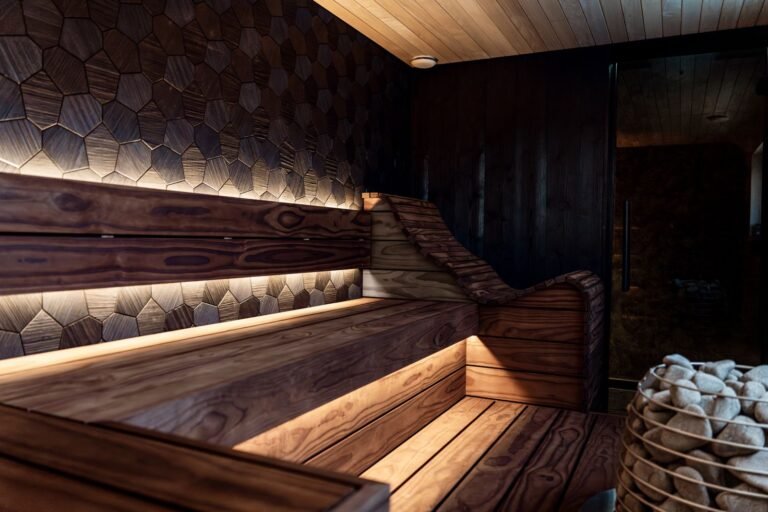
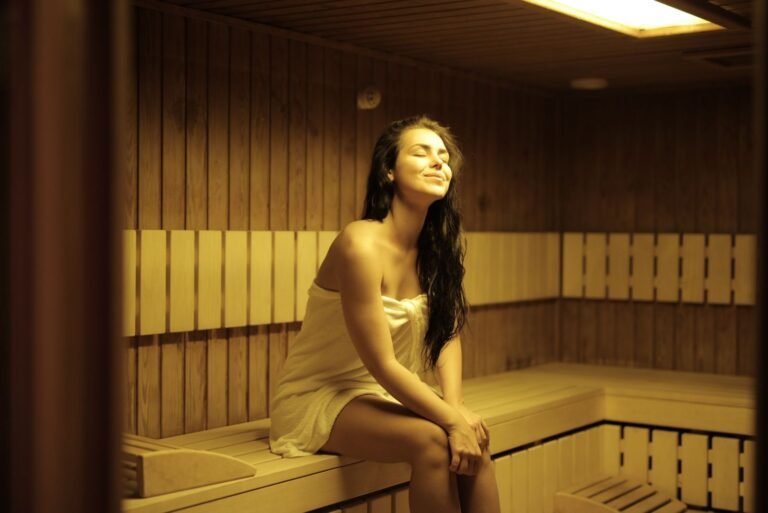
Infrared vs traditional sauna comes down to how the heat reaches you. An infrared sauna warms your body directly at about 35 to 60 °C, while a traditional sauna heats the air to about 70 to 100 °C. The infrared type is milder and quicker to warm up. The traditional type gives intense heat and steam.
Infrared vs traditional sauna: how the heat works
In a traditional sauna, also called a Finnish sauna, a heater warms the air and a pile of stones. The hot air then warms your body. When you pour water on the stones, a wave of steam fills the cabin. This is called löyly.
In an infrared sauna, emitters send out infrared light. This light warms your skin and body directly, a bit like the sun on a cool spring day. The air in the cabin gets warm too, but it stays much milder.
The main differences
Temperature
A finnish sauna usually reaches 70 to 100 °C. An infrared cabin usually stays at about 35 to 60 °C. Because the air is cooler, many people find infrared easier to handle.
Humidity
In a traditional sauna you control the humidity yourself by pouring water on the stones. An infrared sauna stays dry. You cannot make steam.
Warm-up time
An infrared cabin is ready in about 10 to 20 minutes. A Finnish sauna needs about 30 to 60 minutes before it is at the right temperature.
Power use and connection
An infrared cabin for 1 to 2 persons uses about 1.5 to 2.5 kW and can often run on a normal 230 V socket. A Finnish heater uses about 3.5 to 9 kW. Small heaters up to about 3.6 kW can work on 230 V, but larger ones need 400 V. A certified electrician should always connect a sauna heater.
Space and placement
Infrared cabins are often compact and fit in a spare room or attic. A traditional sauna needs a bit more room for the heater and for safety distances. It also has to handle moisture well.
Session and experience
An infrared session usually lasts 20 to 40 minutes in one go. In a Finnish sauna you do rounds of 8 to 15 minutes, with a cool-down in between. The Finnish sauna feels more intense and often more social. Infrared feels calm and gentle.
Comparison table
| Feature | Infrared sauna | Traditional sauna |
|---|---|---|
| Air temperature | about 35 to 60 °C | about 70 to 100 °C |
| Type of heat | infrared light warms the body directly | hot air and stones |
| Humidity | dry | adjustable with water on the stones |
| Warm-up time | about 10 to 20 minutes | about 30 to 60 minutes |
| Power | about 1.5 to 2.5 kW (1 to 2 persons) | about 3.5 to 9 kW |
| Connection | often a normal 230 V socket | 230 V for small heaters, 400 V for larger ones |
| Session | 20 to 40 minutes | rounds of 8 to 15 minutes |
| Experience | mild and calm | intense, with steam |
Which sauna suits whom?
An infrared sauna suits you if you like mild heat, want to use your sauna often and at short notice, have limited space or do not have a 400 V connection.
A traditional sauna suits you if you love high heat and steam, enjoy the ritual of rounds and cooling down, and want to share the sauna with family or friends. Compare the Finnish saunas on SaunaSteamer.
In the end, infrared vs traditional sauna is a matter of taste, space and budget.
Whatever you choose, ask your doctor first if you are pregnant, have heart or blood pressure problems, have a fever, take medication or have been drinking alcohol.
Combination sauna: the middle way
Can you not choose? A combination sauna has infrared emitters and a Finnish heater in one cabin. On one day you enjoy mild infrared heat, and on another day you turn on the heater for a hot session with steam. A combination sauna costs more than a single type, and the heater often needs a 400 V connection. See the combination saunas on SaunaSteamer.
Ready to look further? Read our guide on what to look for when you buy an infrared sauna.
Frequently asked questions
Is an infrared sauna as good as a traditional sauna?
They are different, not better or worse. Infrared gives mild, dry heat, while a traditional sauna gives intense heat and steam. It depends on what you enjoy.
Which uses less power?
An infrared sauna usually uses less power, because it needs fewer kilowatts and warms up faster.
Can I pour water in an infrared sauna?
No. An infrared sauna has no stones, and water can damage the emitters and electronics.
Is a finnish sauna better for groups?
Often yes. A Finnish sauna is more social and is usually built with larger benches for several people.